


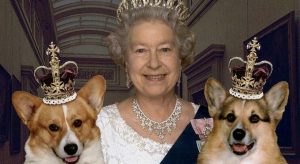
Queen Elizabeth II was one of the longest-reigning and most beloved monarchs in history, but her public image will forever be inextricably linked to a specific dog breed: the Pembroke Welsh corgi. During her 70-year reign, the corgis were not just pets, but true and loyal companions, symbols of the royal family, and silent witnesses to the greatest events of the 20th and 21st centuries.
The origin of a royal passion
Elizabeth’s love for corgis did not begin at the time of her coronation, but has its roots in her childhood.
Dookie: the first corgi
It all began in 1933, when the then Duke of York (future King George VI) decided to gift his daughters, Elizabeth and Margaret, a Pembroke Welsh corgi puppy. The dog was named Dookie. According to tales, Elizabeth, who was seven years old at the time, chose Dookie specifically out of three puppies because he had a slightly longer tail, explaining that “so we can tell if he is happy.”
Susan: the unforgettable gift
The real turning point came in 1944, on the occasion of Elizabeth’s eighteenth birthday. She received a female puppy named Susan as a gift. The bond between the future queen and Susan was so strong that Elizabeth decided to secretly bring her along even on her honeymoon with Prince Philip in 1947, hiding her under blankets in the royal carriage.
The royal dynasty and life at the palace
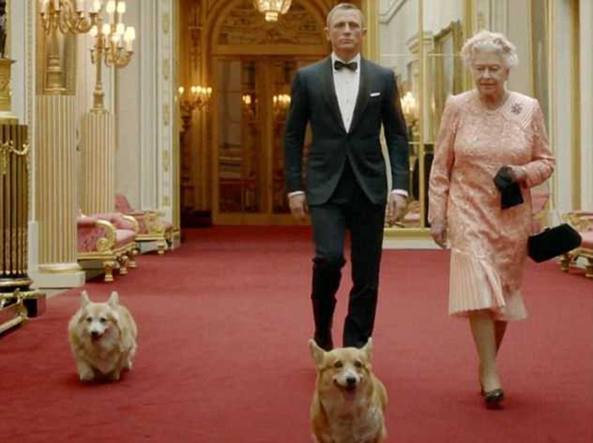
From Susan onwards, the queen bred dozens of dogs, creating a true royal four-legged family tree.
A descent spanning 14 generations
Almost all the corgis the queen owned during her life were direct descendants of Susan. It is estimated that Elizabeth had more than 30 corgis throughout her reign, carrying on a bloodline that lasted a full 14 generations. The monarch’s personal breeding program only stopped in 2015, when she decided not to breed any more puppies so as not to risk tripping over them and to avoid leaving young dogs behind after her death.
Royal privileges and spoils
The life of a royal corgi was, understandably, full of privileges:
- The “corgi room”: at Buckingham Palace, the dogs had a room dedicated to them, equipped with wicker baskets raised from the floor to avoid drafts.
- Michelin-starred menus: the food never came from cans. Royal chefs prepared daily meals based on beef fillet, chicken breast, liver, and rabbit, served in silver or porcelain bowls.
- The mealtime ritual: it was often the queen herself who mixed the food and gave the command to eat, following a strict order of seniority among the dogs.
The invention of the “dorgi”
In addition to being a devoted corgi breeder, Queen Elizabeth is credited with having (unintentionally) created a new dog “breed”: the dorgi.
It all happened when one of the queen’s corgis mated with Pipkin, a dachshund owned by Princess Margaret. The result was an adorable puppy with the elongated body of a dachshund and the features of the corgi. The queen loved this crossbreed so much that she continued to breed dorgis in the following years; among the most famous were Vulcan and Candy.
The final years and the legacy
Despite her decision to stop breeding dogs in 2015, her love for animals never abandoned the sovereign. During the COVID-19 pandemic in 2021, to comfort her during the period of isolation and Prince Philip’s illness, her son Andrew gifted her two new puppies: a corgi named Muick and a dorgi named Fergus (later replaced by another corgi, Sandy, after his premature passing).
Muick and Sandy remained by the queen’s side until her final days at Balmoral Castle. The image of the two little corgis waiting outside Windsor Castle during the state funeral in September 2022 became one of the most touching and melancholic symbols of the end of an era. Today, the dogs live with Prince Andrew and his ex-wife Sarah Ferguson, carrying on the legacy of a special bond that accompanied Queen Elizabeth II’s entire life.