


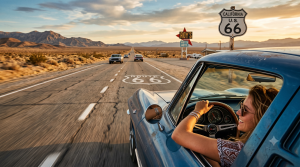
There is a precise moment on U.S. Route 66 where the modern world seems to fade away in the rearview mirror. It might happen while watching the neon sign of a retro diner flicker to life against a bruised New Mexico sunset, or perhaps while cruising past the weathered ruins of a 1930s gas station in the middle of the Mojave Desert.
Established on November 11, 1926, the world’s most famous highway is officially celebrating its Centennial in 2026. For a century, this 2,448-mile stretch of asphalt has been more than just a road; it has been a living, breathing monument to American freedom, reinvention, and the romance of the open road.
But as the Mother Road hits the 100-year mark, a pressing question emerges for the modern traveler: In an era of GPS, electric vehicles, and hyper-efficient interstate highways, why does Route 66 still hold such a tight grip on our collective imagination?
A Century on the Asphalt: The Birth of an Icon
Route 66 wasn’t built for tourists; it was built for survival. Conceived by Oklahoma highway commissioner Cyrus Avery in 1926, the road was designed to connect the rural main streets of the Midwest with the urban hubs of the West Coast.
During the dark days of the 1930s Dust Bowl, it became a literal lifeline. As immortalized in John Steinbeck’s The Grapes of Wrath, Route 66 was the path of flight for hundreds of thousands of “Okies” migrating toward the promised land of California. Steinbeck famously christened it “the Mother Road, the road of flight.”
By the 1950s and 60s, the narrative shifted from desperation to liberation. Post-war prosperity turned Route 66 into the ultimate vacation highway. Mom-and-pop motels, quirky roadside architecture, and neon-drenched diners sprouted up across eight states to cater to a new generation of American families eager to explore their country.
Mapping the Legend: 8 States, 2,448 Miles
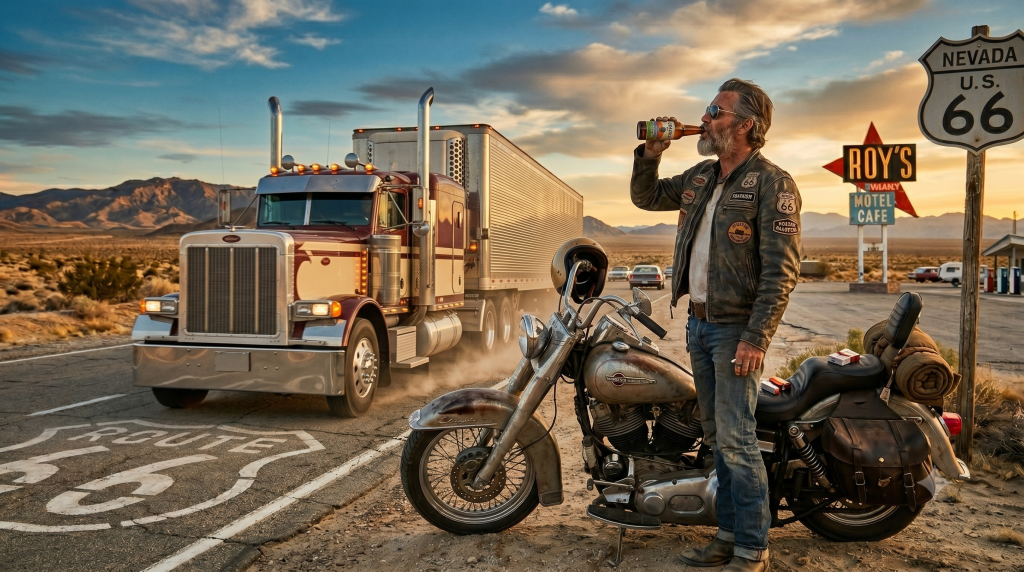
To truly understand the scale of a Route 66 road trip, you have to look at the sheer diversity of the American landscape it traverses. Starting from the shores of Lake Michigan in Chicago, the highway cuts diagonally across the heartland before terminating at the Pacific Ocean.
| State | Landscape Highlight | Iconic Vibe |
| Illinois & Missouri | Rolling farmlands, historic bridges | Classic Midwest Americana, Cozy Dogs |
| Kansas & Oklahoma | Wide-open prairies, Native American history | The birthplace of Route 66 culture |
| Texas | The vast Panhandle, rugged ranch land | Cadillac Ranch, giant steaks |
| New Mexico & Arizona | High deserts, red rock mesas, neon hubs | Adobe architecture, retro motels, Grand Canyon gateway |
| California | The Mojave Desert, San Gabriel mountains | Ghost towns leading to the Santa Monica Pier |
The Ultimate Route 66 Bucket List: Cruising Through Americana
For anyone planning a pilgrimage during this 2026 Centennial year, the road offers an overwhelming buffet of nostalgia. While thousands of miles of the original road have been bypassed by modern interstates (and officially decommissioned in 1985), the spirit of the highway has been fiercely preserved by local associations.
Here are the non-negotiable stops for your itinerary:
- The Launchpad (Chicago, IL): Snapping a photo at the official “Route 66 Begin” sign on Adams Street before grabbing breakfast at the historic Lou Mitchell’s diner.
- The Blue Whale of Catoosa (Catoosa, OK): One of the most famous examples of mid-century roadside kitsch—a giant, waterfront iron-and-concrete whale built in the 1970s as an anniversary gift.
- Cadillac Ranch (Amarillo, TX): An public art installation featuring ten half-buried, graffiti-covered Cadillac cars nose-first into the Texas dirt. Visitors are actively encouraged to bring spray paint and leave their mark.
- The Wigwam Motel (Holbrook, AZ): Where else can you sleep inside a concrete tipi from the 1950s with vintage cars parked outside your door?
- End of the Trail (Santa Monica, CA): The emotional finale. Watching the waves crash against the Santa Monica Pier right next to the iconic “End of the Trail” sign.
The 2026 Centennial Revival: Why We Still “Get Our Kicks”
The year 2026 has breathed new life into the historic corridor. From Illinois to California, millions of dollars in federal and state grants have gone into restoring classic neon signs, reviving ghost-town main streets, and upgrading historic infrastructure for the modern era.
Interestingly, Route 66 is experiencing a profoundly modern renaissance. The very things that threatened to destroy it decades ago—speed and efficiency—have made it valuable again. In a fast-paced digital world, a Route 66 road trip is the ultimate antidote. It forces travelers to practice “slow travel.” You cannot rush Route 66; if you take the bypasses, you miss the point entirely.
Furthermore, the road is adapting. The 2026 Centennial sees a major push toward making the Mother Road the world’s most sustainable historic highway, with a rapidly growing network of EV charging stations styled to look like vintage 1950s fuel pumps.
Journalist’s Note: Route 66 is a mirror of America itself—imperfect, constantly evolving, resilient, and deeply hopeful. To drive it is to realize that the destination was never the point. The point was always the journey, the conversations with eccentric locals, and the shared belief that there is always something beautiful waiting just over the next horizon.
Essential Tips for the Modern Road Tripper
If you are looking to get your kicks on Route 66 this year, keep these expert tips in mind:
- Don’t Rely Solely on GPS: Modern maps will try to direct you to the fastest route (the Interstate). Buy a specialized Route 66 guidebook or download a dedicated turn-by-turn preservation app to stay on the historic alignments.
- Give Yourself Time: To do the full drive justice, you need at least two weeks. If you only have a few days, focus on a specific segment, like the neon-heavy stretch through New Mexico and Arizona.
- Book Historic Accommodations Early: Because of the 100th-anniversary celebrations throughout 2026, iconic spots like the El Rancho Hotel in Gallup or the Wagon Wheel Motel in Missouri are booking up fast.
One hundred years later, the neon still burns bright on Route 66. Roll the windows down, turn up the radio, and go find out why this timeless ribbon of asphalt remains the ultimate American adventure.