


We live in an age of paradox. While digital globalization tends to flatten our habits—pushing us toward standardized consumption and lifestyles—a visceral need for uniqueness is emerging from the ground up. Landscape diversification is far from a mere geographic feature or a collection of postcard views for tourists; it is the very matrix that generates the plurality of cultural models.
But how exactly does the physical environment shape who we are, how we think, and how we design the future? And why has protecting this variety become the most urgent geopolitical and social challenge of our century?
Geography and Identity: The Indissoluble Link Between Humanity and Territory
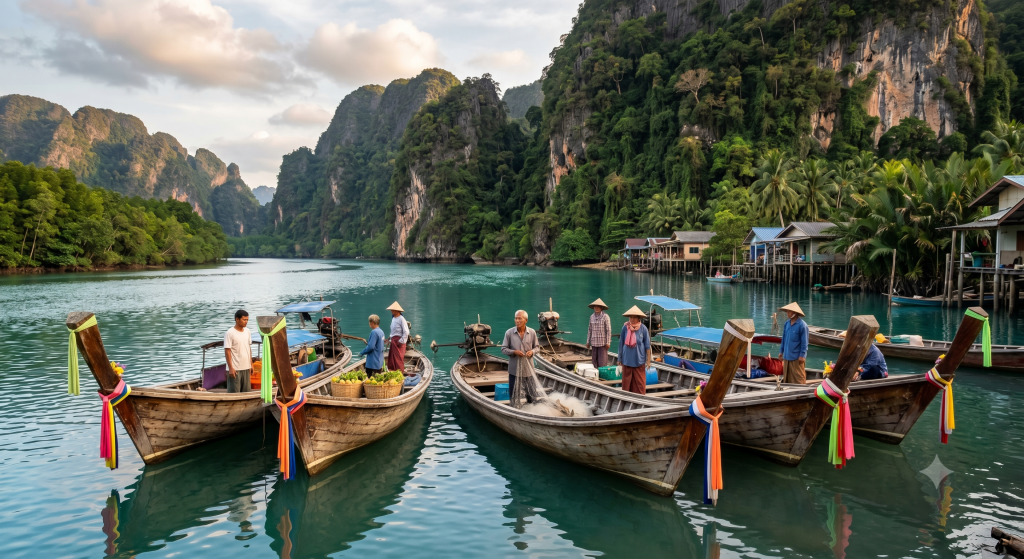
Landscapes are not static backdrops; they are living organisms in constant evolution. A community that grows among the sharp peaks of the Alps will naturally develop a culture of resilience, protective isolation, and community cooperation. This is fundamentally different from a civilization that flourishes along the Mediterranean coast, where the open sea has historically stimulated trade, openness to the “other,” and linguistic hybridization.
Cultural models are, in essence, the creative responses that human beings devise to meet the challenges of their specific habitat. When a landscape changes—whether due to climate change or uncontrolled urbanization—we don’t just risk losing a plant species or a scenic view. We risk losing the entire historical memory and value system of the people who call that place home.
“The landscape is the mirror in which a society reflects itself and recognizes its own identity.”
The Crisis of Homogenization: The Risk of Social “Monoculture”
Over the last few decades, the expansion of megacities and the replication of “non-places” (shopping malls, cookie-cutter suburban tracts from New York to Shanghai) have triggered a massive process of cultural homogenization. When landscapes become uniform, cultural models inevitably impoverish.
This phenomenon drives a dangerous transition marked by:
- Loss of local knowledge: Traditional agricultural techniques, native sustainable architecture, and unique dialects face extinction.
- Social fragility: Communities stripped of their symbolic landscape lose their sense of belonging, making way for urban alienation and social fragmentation.
- The decline of experiential tourism: If every destination ends up looking exactly like the last, the core value of travel and discovery collapses.
Why Diversification is Our Greatest Wealth
Promoting diversification is not about retreating into nostalgic traditionalism. On the contrary, it means applying the very principle that makes natural ecosystems strong to our social fabric: biodiversity. A pluralistic system is inherently more resilient, more flexible, and vastly more innovative.
Three pillars define the value of landscape and cultural diversity today:
- Sustainability and climate resilience: Traditional cultural models often hold the keys to efficient, non-destructive resource management (such as historic terracing or ancient irrigation systems).
- The economy of authenticity: Global markets increasingly reward local identity. The global success of the Made in Italy brand, for instance, is deeply tied to the fragmentation and richness of its micro-landscapes and unique food traditions.
- A laboratory for the future: The intersection of different landscapes and cultural models sparks new forms of artistic, philosophical, and technological expression. Diversity is the ultimate fuel for human creativity.
Toward a New Territorial Renaissance
The challenge of the future is not to halt modernity, but to decline it in the plural. Architects, urban planners, sociologists, and policymakers are now tasked with designing spaces that respect the topography and deep history of territories.
The diversification of landscapes and cultural models must become a top priority on the global political agenda. Only by preserving the complexity of our “Earth’s mosaic” can we guarantee future generations a world that is not just efficient and hyper-connected, but still beautifully human, multifaceted, and surprising.